

Milky Way over the Great Lakes
This calm, quiet frame almost didn't happen. Behind it was a swarm of mosquitoes, forty pounds of gear on a rocky shoreline, and a nagging fear the whole night might not come together. I chase the same thing every time I go out: the sense that the Milky Way has always been there and always will be, set against a foreground calm enough to let you sit with that for a minute. That's what I was after here, and it took some doing to get it.
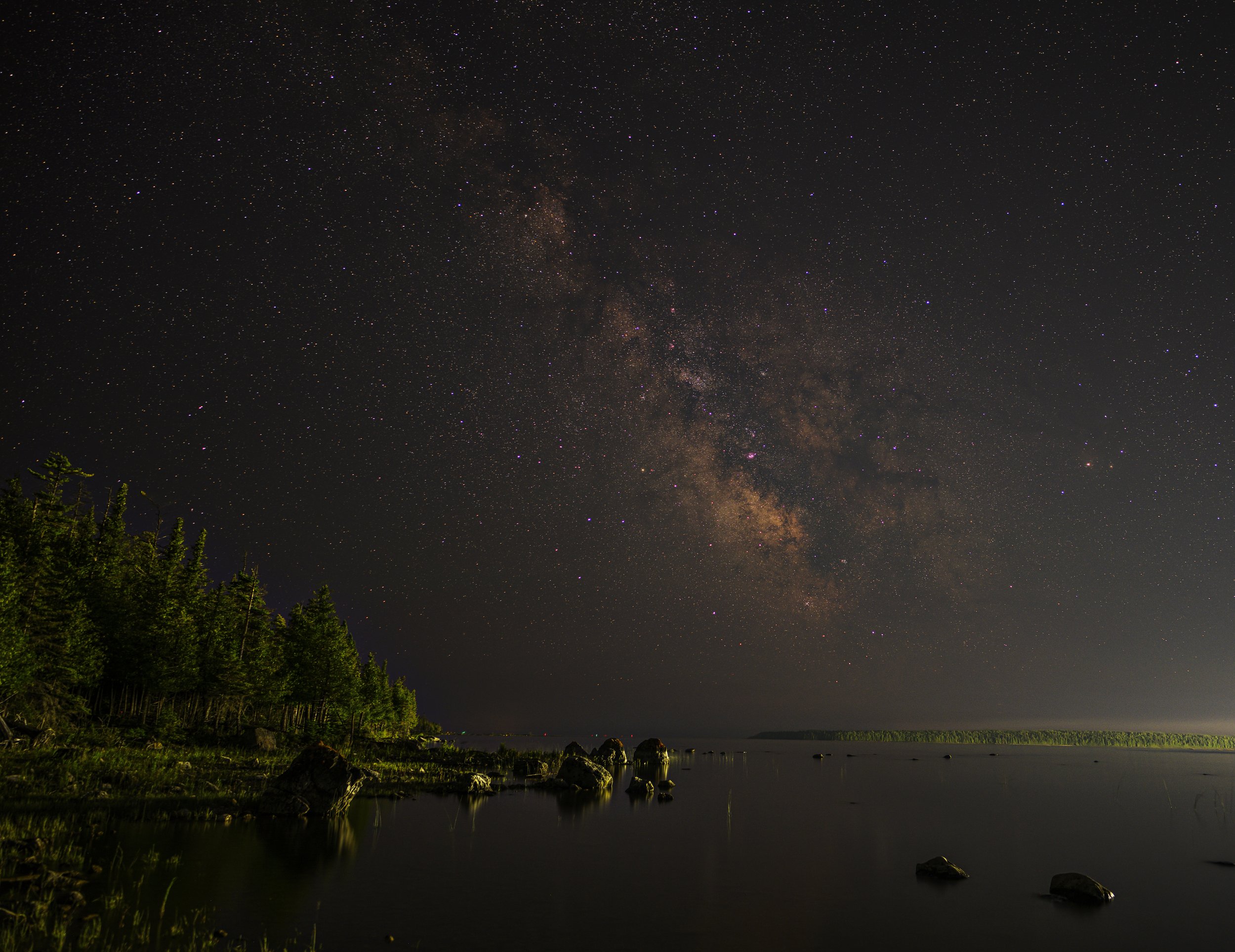
Milky Way over Lake Huron Shoreline Bush Bay Trail, Cedarville, MI 7/11/26 15 stacked images
It starts on Google Maps, looking for shoreline that's compositionally interesting and far enough from city light to keep the sky dark. Once a spot looks promising, I run it through PhotoPills to see how the Milky Way will actually align with the landscape on the night I'm planning to shoot.
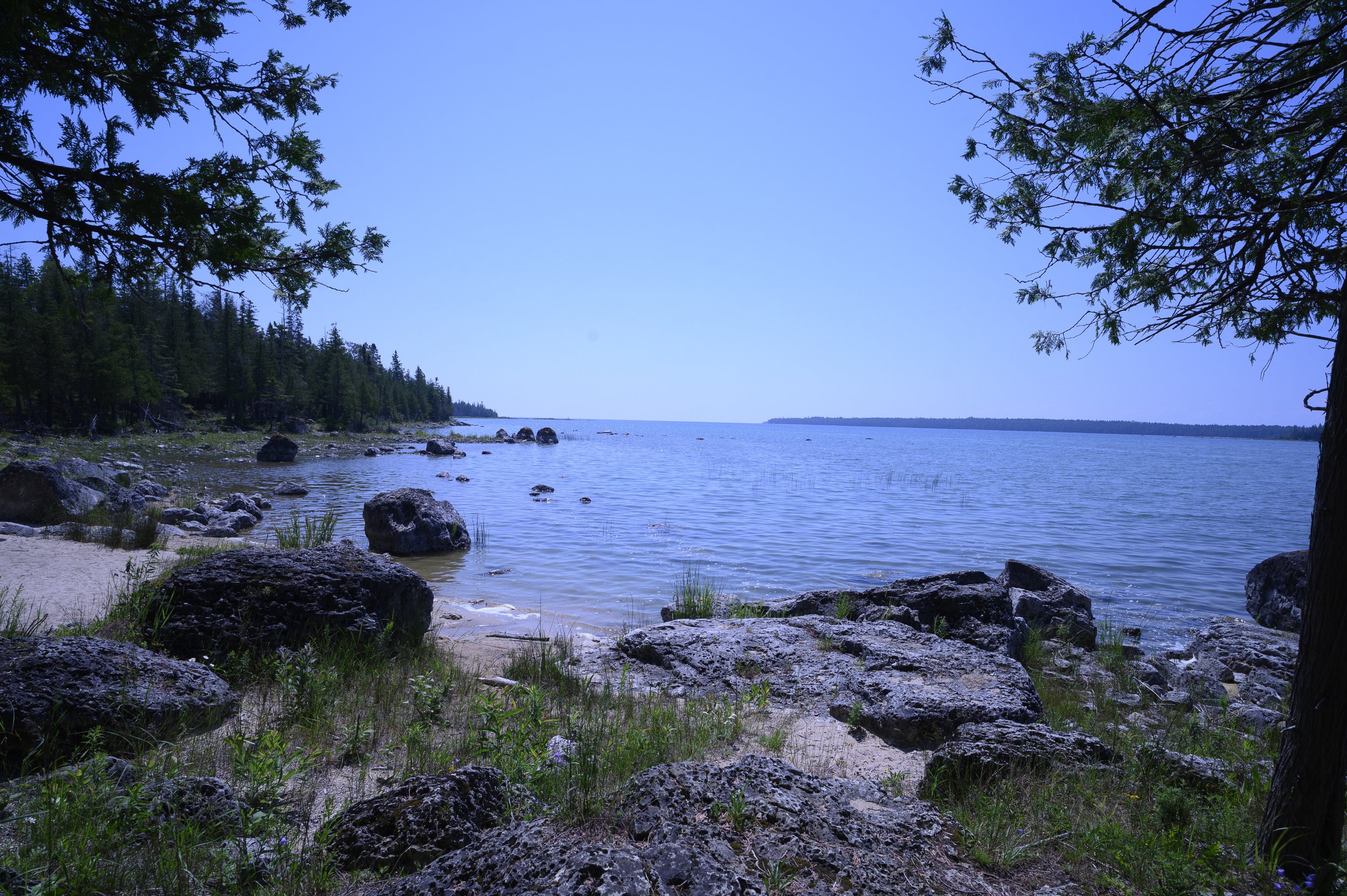
That's still just theory, so next comes a daylight recon visit‚ walking the site in person with the alignment app open, checking how it'll really play out, and flagging anything that could turn into a problem after dark: rough terrain, spotty cell service, tricky footing near the water.
Daylight test shot
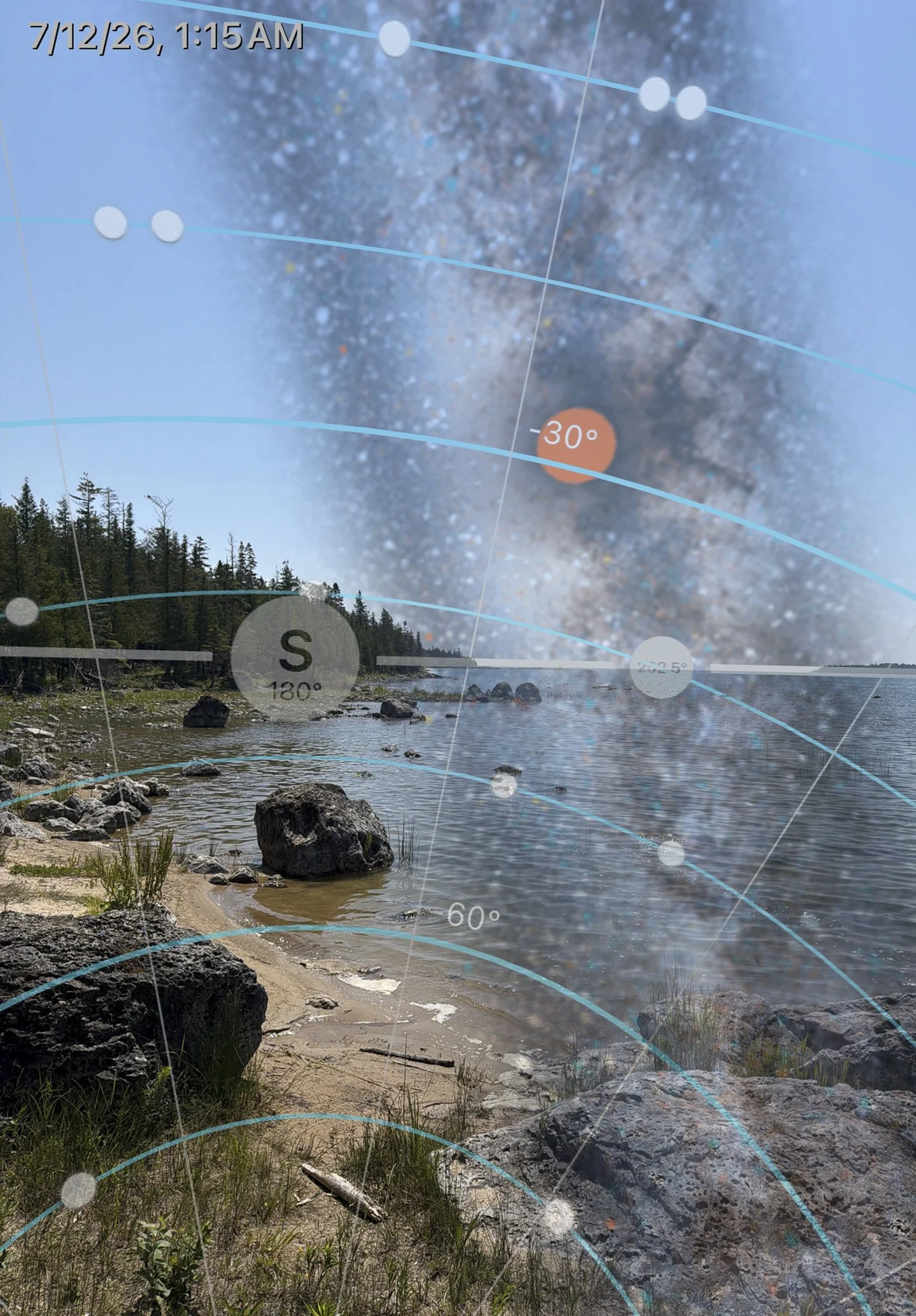
The planning App is called PhotoPills. Among the many tools it offers is a Night Visual Augmented Reality. Standing in a potential shooting location it can show how the Milky Way positions at any time and date.
Perfect. The orange dot represents the core of the Milky Way, which is always a main compositional element. This is the image I started chasing.
Arriving with two camera bodies, four lenses, two tripods, a star tracker, and the rest of the supporting gear meant a short hike that felt a lot longer than it was, picking a rocky path down to the lakeshore. Setting up in sand is its own small battle ‚not so much for the tripods as for keeping sand out of every zipper and lens cap.
Then came the mosquitoes. I'd sprayed everywhere, which seemed to only get their attention. For the first time ever, I pulled a mosquito net over my hat and got to work ‚ an occasional visitor on the back of a hand notwithstanding.
As the sun dropped, the sky darkened and the stars came out slowly, one at a time. I set the tracker up on one camera, left the other on a static tripod, and focused both on the brightest star I could find. Then: test shots.
The first ones brought a wave of relief. This might actually work. And the lights from the Limestone plant added an amazing highlight to the rocks and trees.
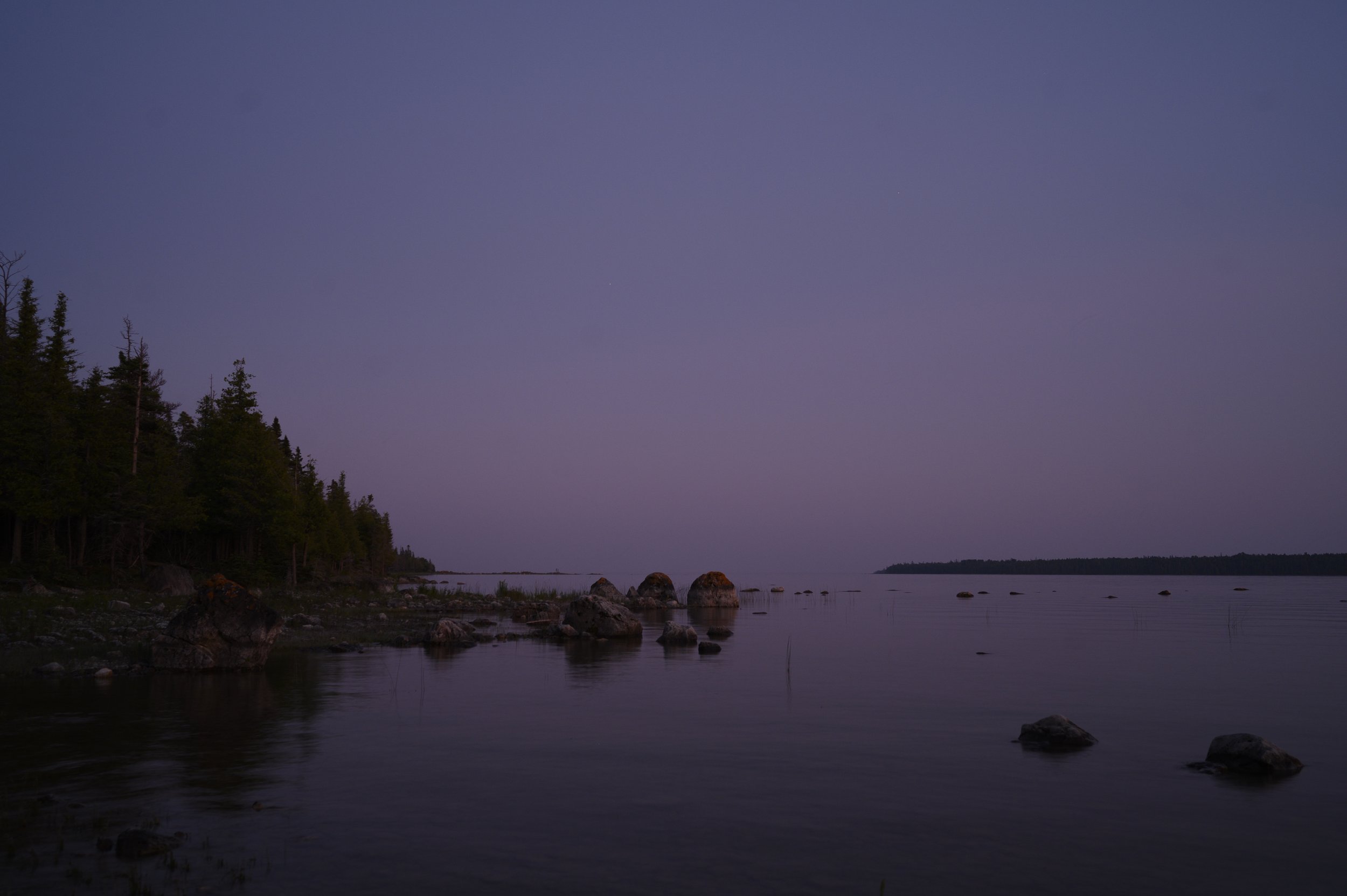
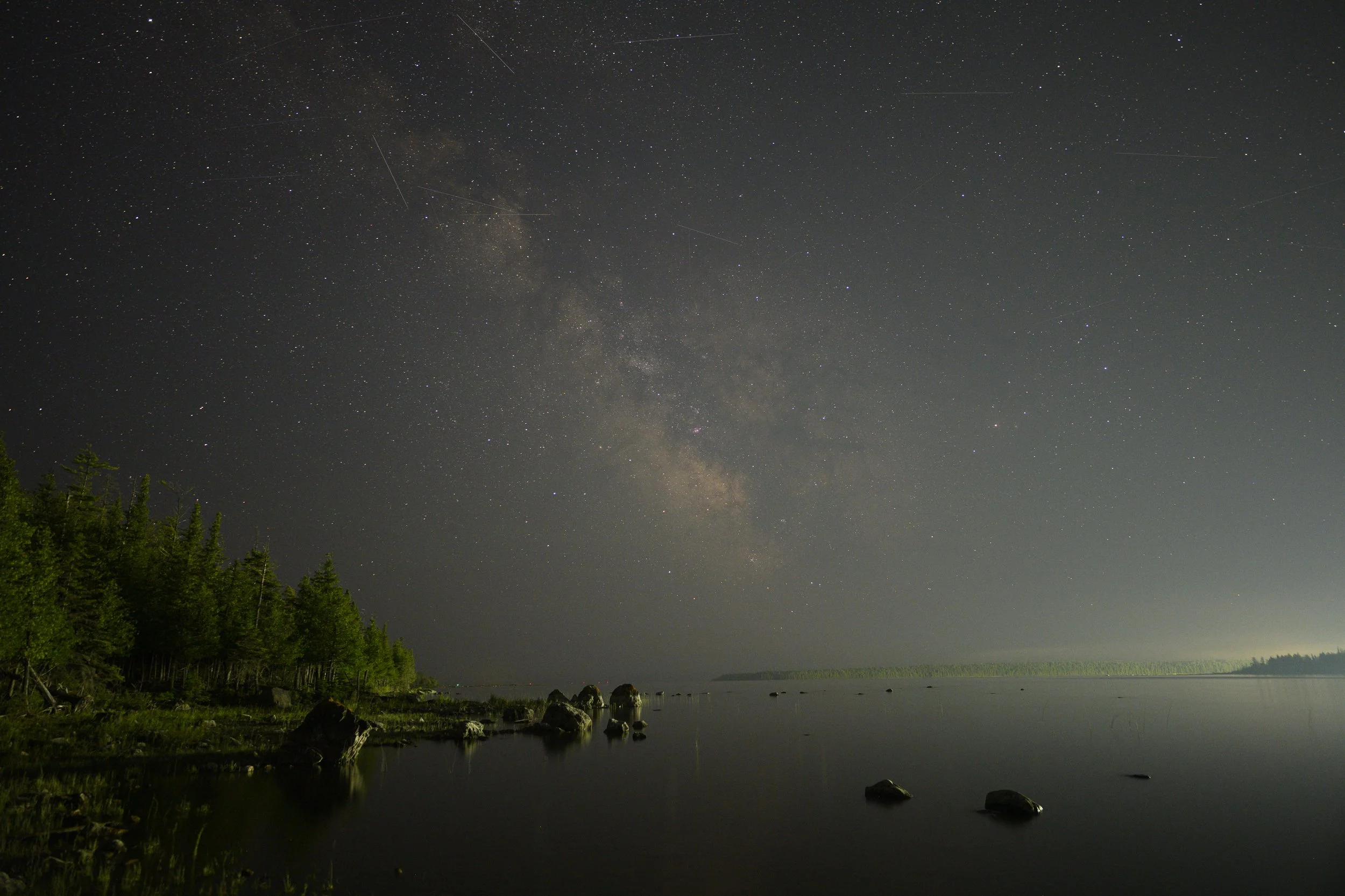
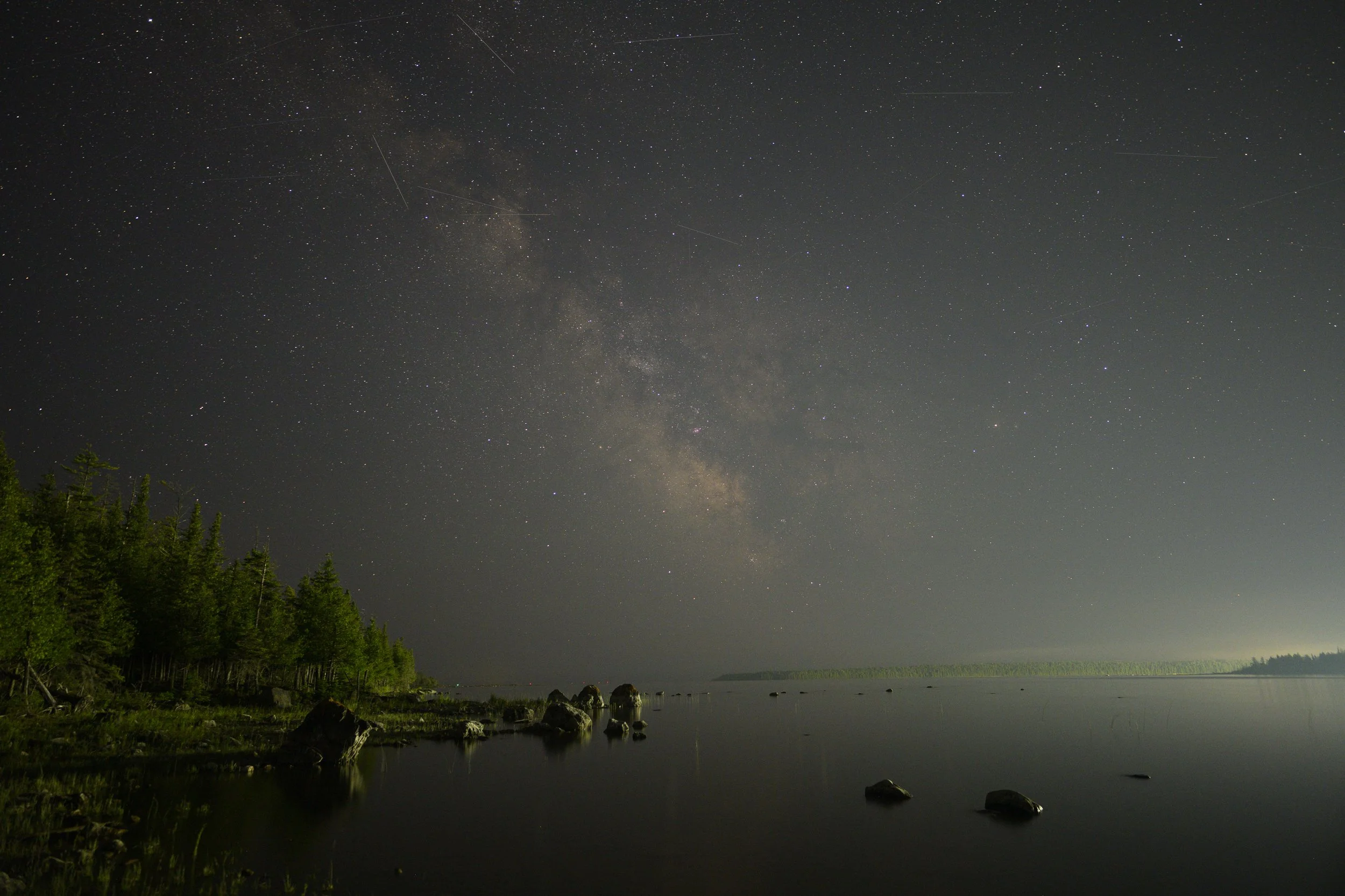
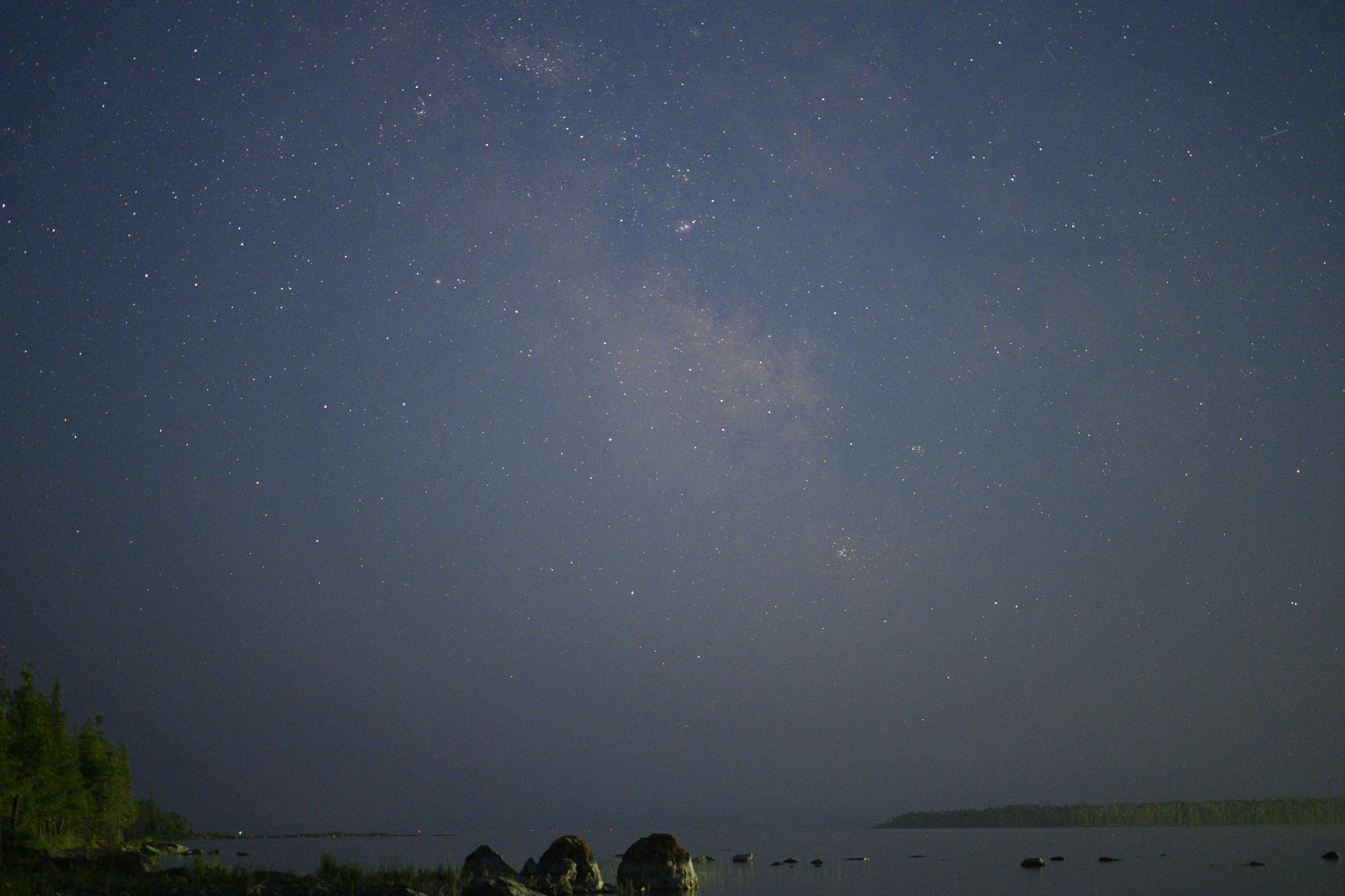
When the cameras have been set up right and they have gathered everything they can, the edit isn't heavy lifting. Here, it was mostly contrast, pulling out the highlights in the galactic band, and enhancing the stars a touch.
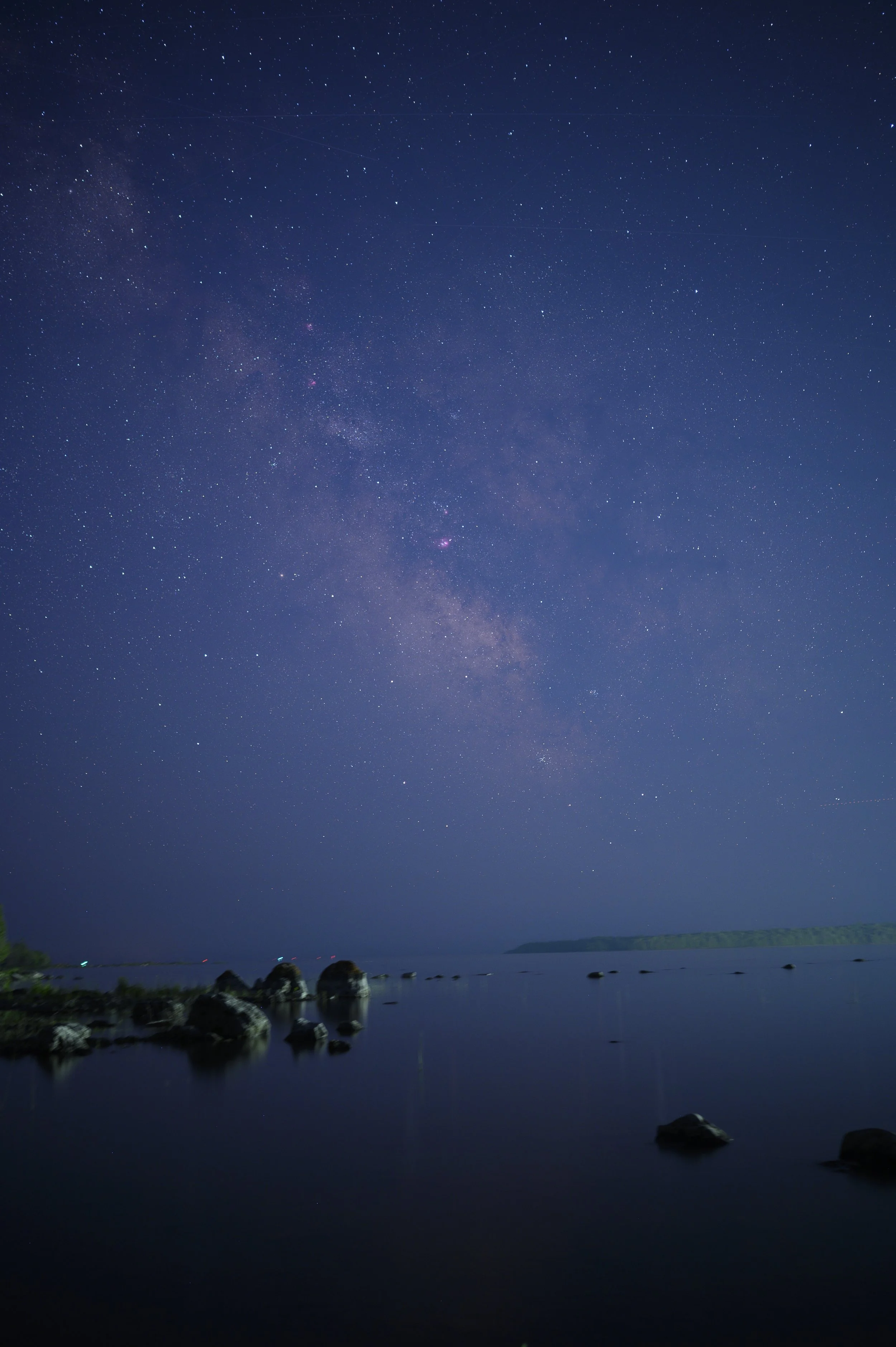
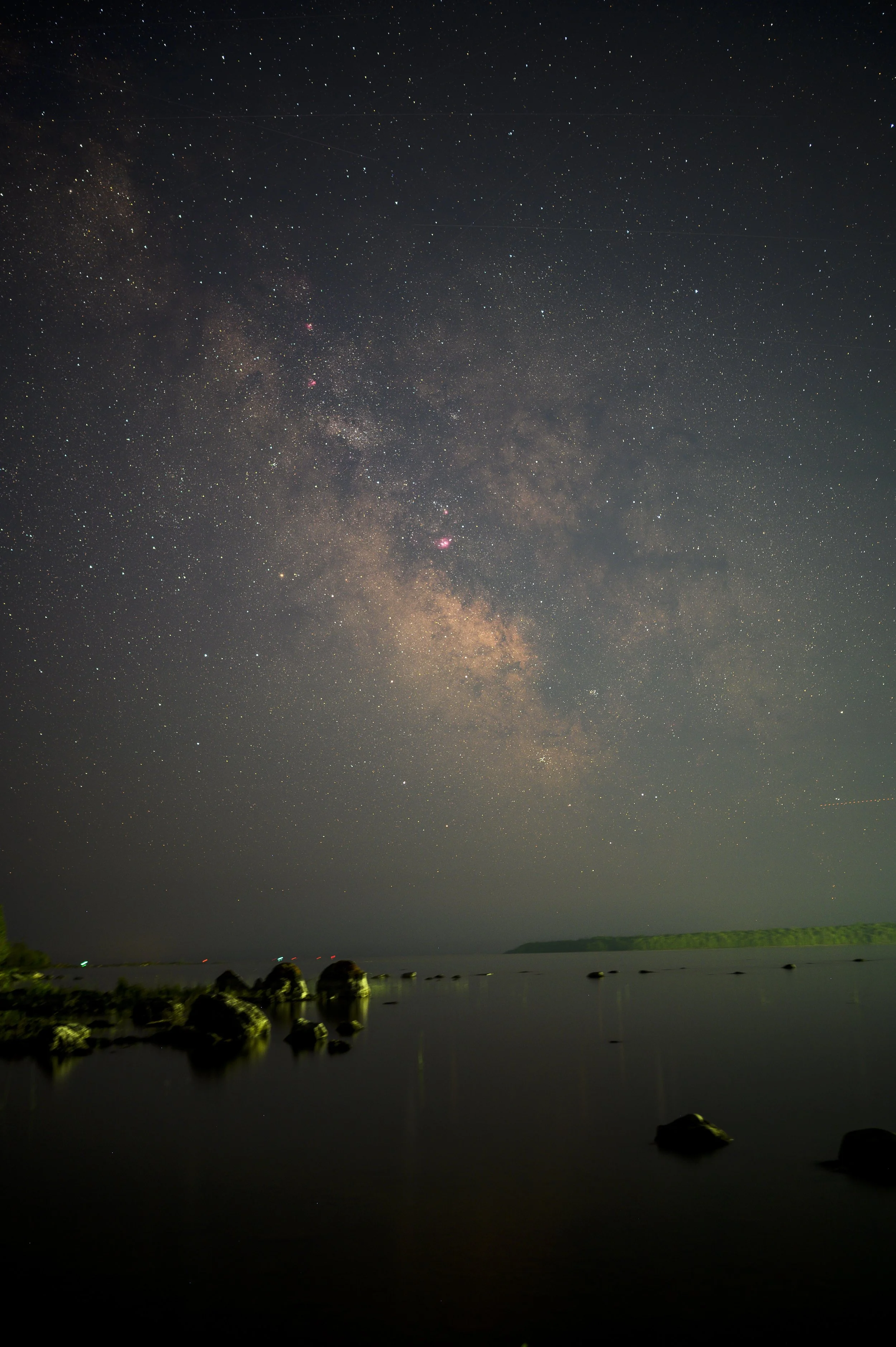
One example of an edit. RAW on the left, edited on the right. White balance is always tricky. I like the sky to be as neutral as possible, then it is just bringing out the details with selective contrast. With the technology, the sky can be edited independent of the foreground.
Gear and settings - Camera bodies were Nikon Z8 and Nikon Z6ii (which is astro modified, meaning the filter that blocks H alpha light has been removed to allow for more light to reach the sensor and hydrogen gas present in space shows up as magenta). Lenses were mostly 35mm f1.8 and 14-24 f2.8 shot at 24mm. I tried a couple of shots with a 50mm 1.8 and 20mm f1.8, but found them to be on either side of the image I wanted. For this shot, I was looking for a large Milky Way core and 35mm was the sweet spot.
The star tracker used was a Move Shoot Move (MSN) Nomad. Aligning this with Polaris (North Star) via a laser, allows it to negate the rotation of the earth and yield shutter speeds in the 2 to 3 minute range. These then get blended with a non tracked foreground.
All settings are Manual Mode, including focus. Aperture for static shots is wide open (1.8, 2.8). Shutter speed is typically 13 to 15 seconds to avoid star trailing and is driven by the focal length (500/focal length yields the starting point, the trial/error from there). Then the exposure is balanced using ISO. For static shots this is 1600, 3200 and is dependent on how dark the sky is and how well the camera manages low light photography. Ten to fifteen shots are taken, then stacked in Starry Landscape Stacker ($10 on a Mac, Sequator free for PC) to eliminate noise in the image. This is a tried and true method to capture great Milky Way images
For tracked photos, a long exposure foreground using just starlight to light the scene or capturing images during blue hour can be used for the foreground part of the image. Tracked photos are typically 2 to 3 minutes, Aperture wide open (1.8, 2.8) and ISO 400 to 800. One photo is usually sufficient, although a few (5 to 10) could be stacked as well to bring out more detail
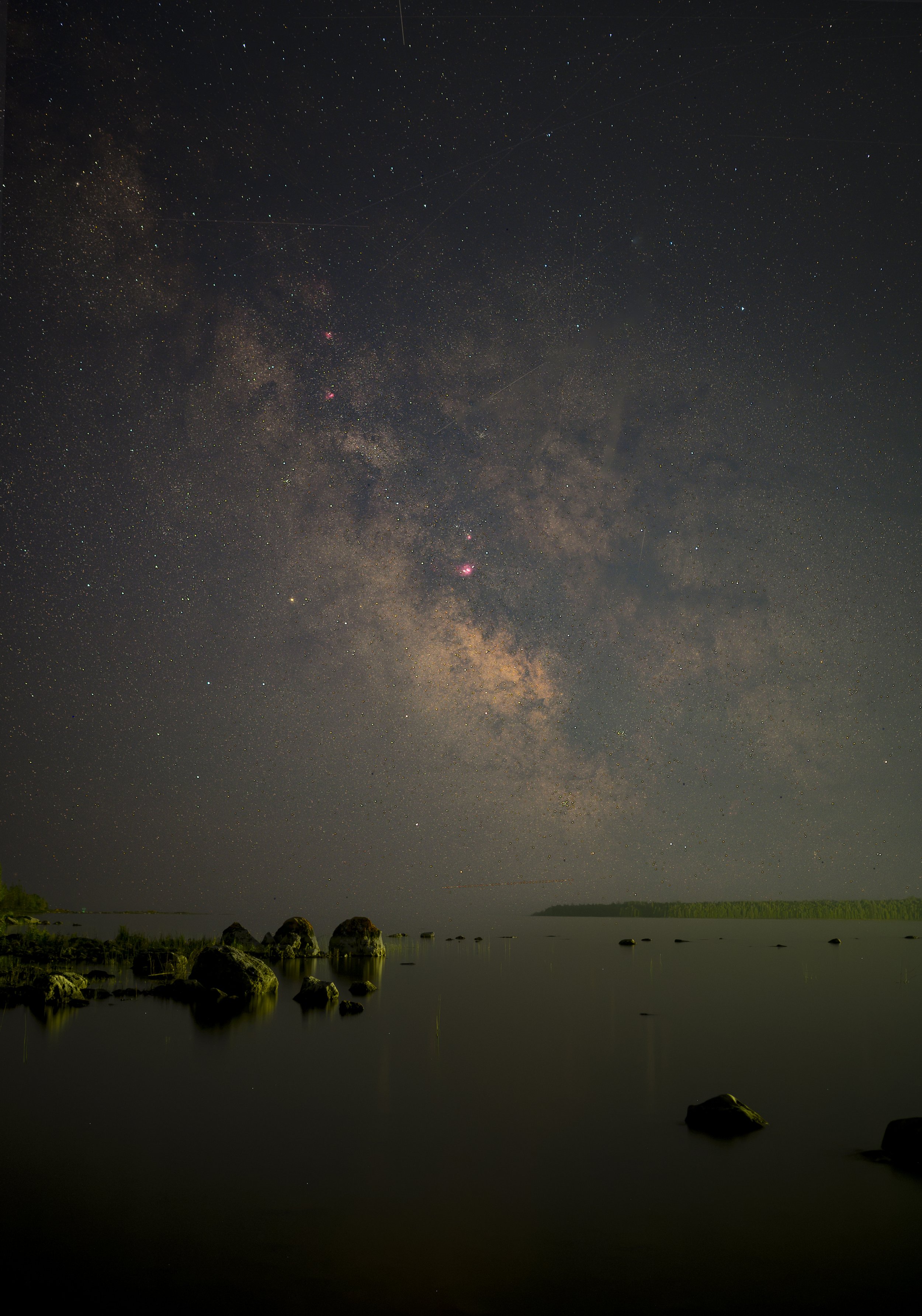
Milky Way over Lake Huron, Nikon Z6, 35mm Tracked, blended, 2 min sky exposure ISO 400, foreground 10 sec 500 ISO. This image can be found in the store by clicking here
That warm light on the right isn't moonrise ‚ it's a limestone plant I hadn't scouted for. It lit the rocks in a way I didn't expect, though it also worked against the reflection I was hoping for, once a light breeze put just enough ripple on the water to dull it.
Even so, there's a calm, contemplative feel to the whole scene.
Lake Huron is tiny against the vastness and timelessness of the Milky Way overhead. It's hard not to wonder what's actually out there, and what's still to come.
While I am thrilled with the final results, I enjoyed the entire process (minus the mosquitos), planning, setting up and watching the sky grow dark and the stars appearing above the calm lake.
If you enjoyed this, continue to explore the website for more images of natural beauty. Follow me on Facebook. Fill in the form below to connect to the newsletter.